
1948: Joe's World Title
If the Oma fight was far from satisfactory as a comeback, Bruce’s next fight against Lee Savold was equally disappointing, but for very different reasons, even though again he did win it, technically.
But before that, there’s a little matter of the World Champion Joe Louis to contend with!
Joe’s Title
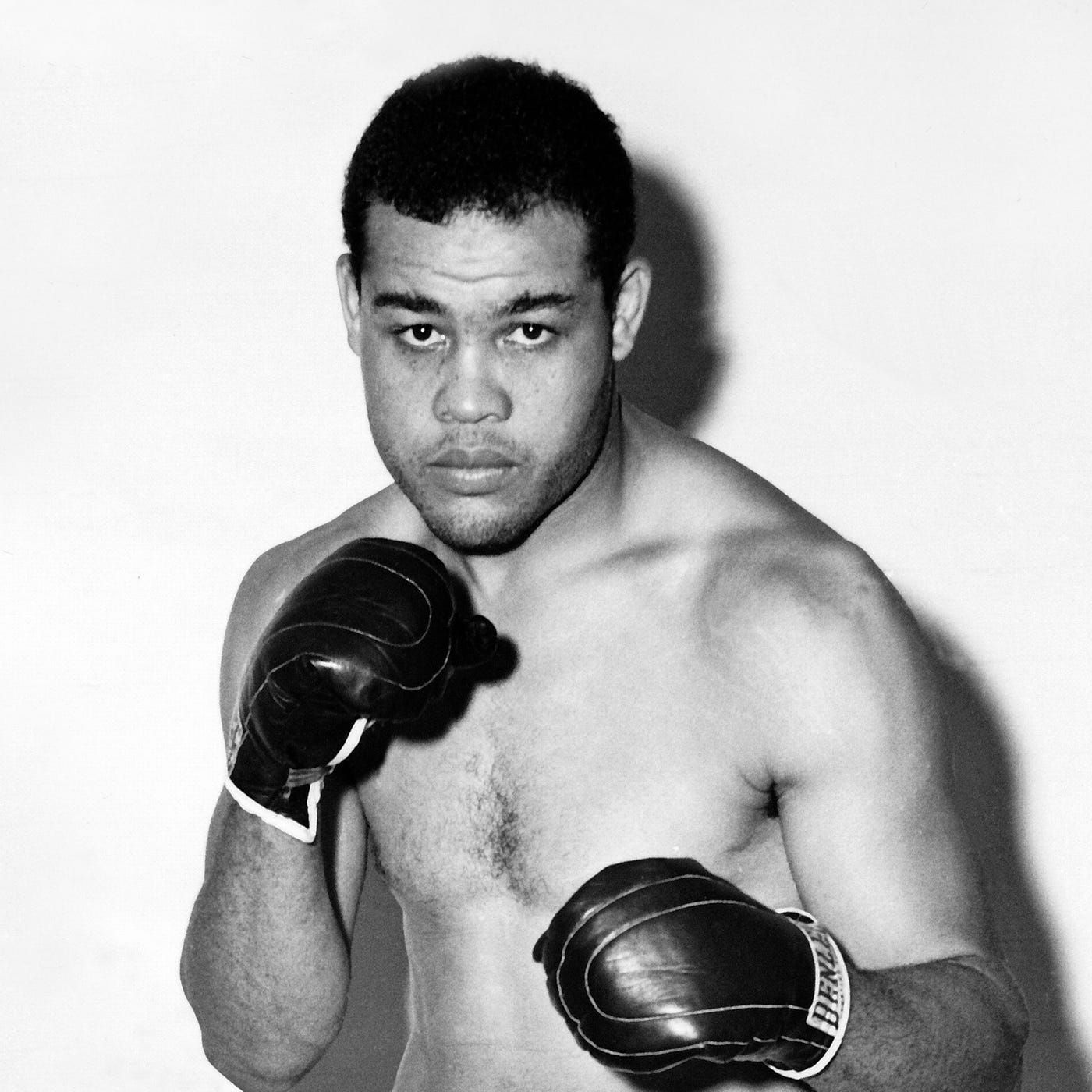
To Carry On ....?
Lee Savold was ranked fourth in contention for Joe Louis’s seemingly unassailable heavyweight title crown. The reality was, though, that Louis was himself struggling towards the end of his dominance of the game, though this wasn’t necessarily clear at the time.
During his magnificently dedicated period in a four year stint in the forces during the war, Louis boxed hundreds of exhibition bouts witnessed by almost two million soldiers to help encourage morale and the war effort. As the author of the best recent book on Joe Louis puts it, he “emerged unscathed even more of a hero in 1945 than he had been in 1938 when he knocked out Schmeling.” [Randy Roberts, Joe Louis: Hard Times Man, Yale University Press 2010, 231]
But for all his efforts, Louis was in serious trouble. He was in huge debt, including to the tax authorities, having earned an estimated $4 million between 1935 and 1942. This period spanned from his professional career taking off all the way to him joining the forces in the Second World War. Thus he found himself saddled with $3,500,000 debt by 1945.
As Roberts puts it, he was also “forty pounds over his best fighting weight, badly out of shape, and past his prime.” [234]
So in 1946, at the same time Bruce was making a brilliant come-back against Freddie Mills in the wake of the Mauriello disaster, Joe Louis was getting set to meet his first real challenge against Billy Conn. Louis won convincingly but only because Conn was far from the dangerous fighter of their previous encounter in 1941, when he came within a hair’s breadth of becoming the champion.
Three months later, Louis capitalised on his revival by beating Tami Mauriello in the first round. Mauriello “was devastated by the loss, saying in a controversial live post-fight radio interview, ‘I got too god-damned careless,’ and then crying in his locker room, repeating, “The first god-damned round! The first god-damned round!’” It must have seemed as if the magician was back but Professor Roberts sums it up more realistically: “It was not a great fight, though it was the last fight that allowed Louis to even think that he was still a great fighter.” [236]
Or Not to Carry On ....?
At the point when Bruce was undergoing and recovering from eye surgery in December of 1947, Louis beat Joe Walcott. But it was a shabby and unconvincing split decision by the judges and earned boos from the crowd.
Joe was unwilling to retire on a sour note. In June 1948, the night before Bruce became a father, Louis successfully defended his title for the twenty-fifth successive time in a rematch against Walcott, the twenty second defence to end in a knockout. But the reality was staring Joe Louis in the face. He announced to the New York Times “That’s my last fight. I’ve been around a long time and I think it’s about time to quit. And I’m glad to quit with the title still mine.” [238]
On March 1st 1949, Joe Louis officially decided to abdicate his crown.
Though commentators realised Joe was past his prime, the act of saying that you’re retiring and actually following through with this are two different things. Until the following year, Louis remained the official “World Champion” with the right to re-enter the ring and carry on.
So everything was still to play for among those in contention for the crown, including Bruce and Lee Savold. Phil Brown, boxing correspondent of the Yorkshire Evening Post gave a summary of the situation:
“Despite the Oma fiasco I have no doubt that Harringay will again be packed. The fight is bound to be better too. Savold is no ‘play boy’ and even though he is four years older than Bruce he brings a wealth of American top class ring experience and a good reputation with him.”
Brown concluded that Bruce looks
“from the American situation, as if victory will put him among the few who can be seriously considered as challengers to Louis. [. . .] Woodcock’s characteristically laconic comment, on learning from a Doncaster colleague that he was to fight Savold, was: ‘He will suit me fine. I have no fears at all.’”
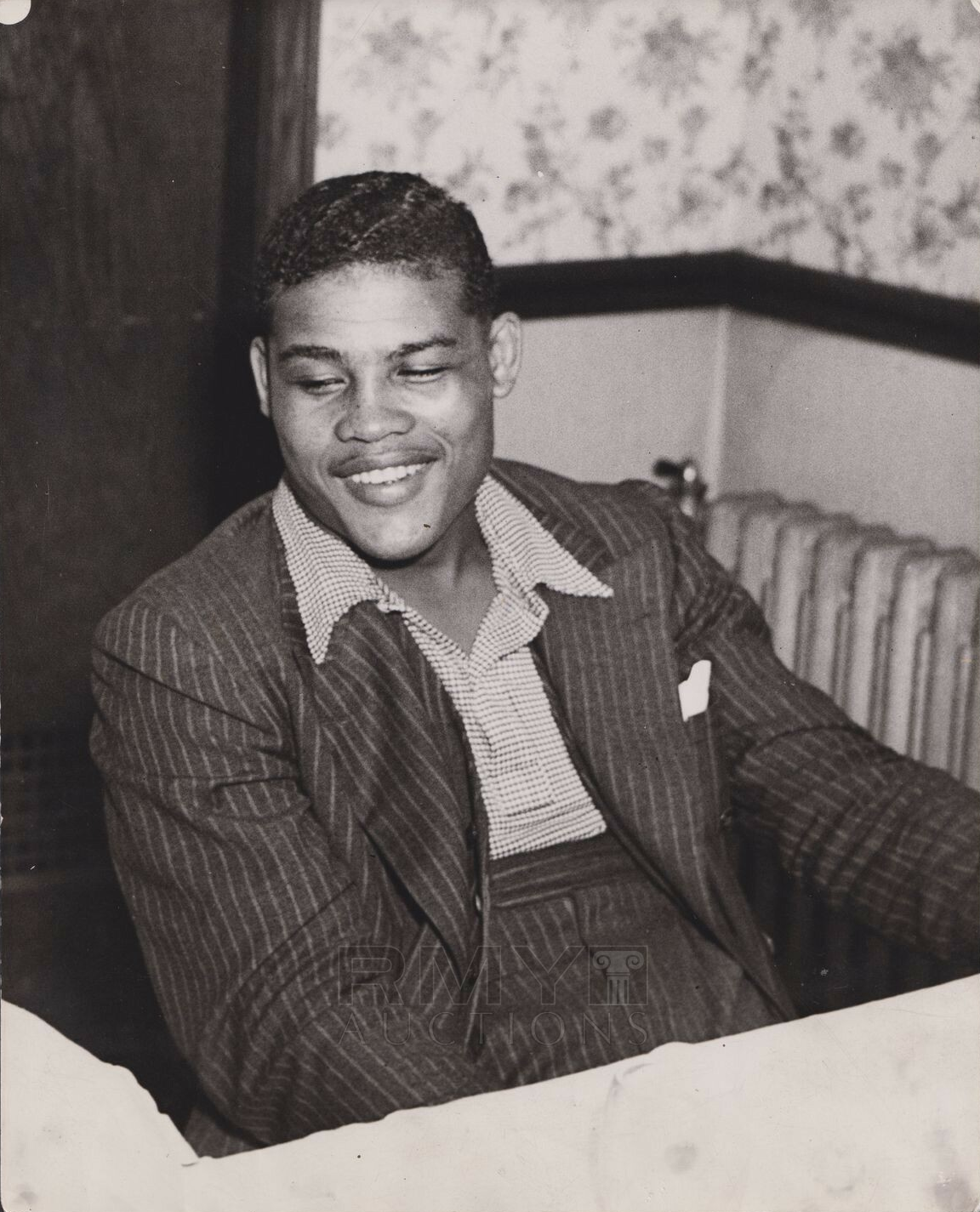
Joe Louis in 1935
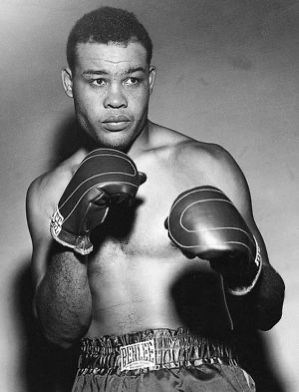
Joe Louis in 1946
