1948: The Comeback
1948 Fight Record
| Date | Opponent | Venue | Result |
|---|---|---|---|
| 21/09/1948 | Lee Oma | Harringay Arena, Harringay, London, UK | Won - KO - Round 4 |
| 06/12/1948 | Lee Savold | Harringay Arena, Harringay, London, UK | Won - Disqualification - Round 4 |
Tough Training
During his 18 month layoff after the Baksi debacle, Bruce’s weight shot up from 13½ stone to over 16 stone. This was caused by a combination of factors: enforced inactivity, the absence of his usual disciplined training lifestyle and, it must be admitted, his love of food.
To counter that, his father Sam put together his own version of a Turkish bath. Since building restrictions prohibited constructing a proper one, a large square box of asbestos sheeting with a hole in the top for the head and a deal board seat, with steam fed in through pipe in the floor would have to suffice.
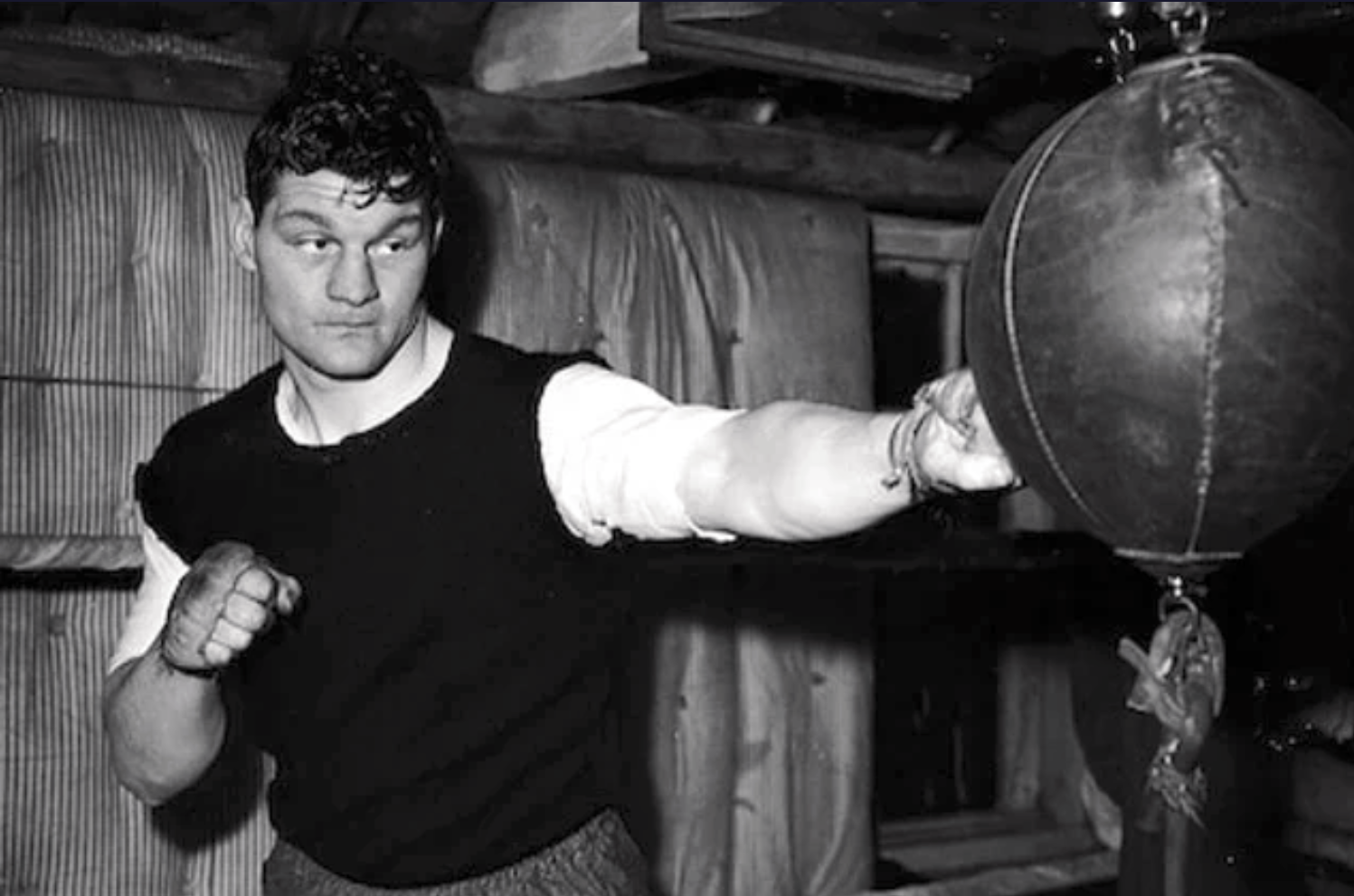
Over the next seven months, agonisingly and tortuously, Bruce fought his way back into his training routine - hours of roadwork, rope skipping, and the rest. After the enforced and gruelling lay-off, it was the hardest, longest and toughest intensive training he’d ever done.
Pressing Questions
Meanwhile, in some quarters, press sympathy had continued to turn into questions, and worse.
In the
Sunday Mirror of 15th February, while not blaming Bruce for “the disastrous turn which his fortunes took last April”, Peter Wilson, with his customary radical, opinionated thunder, threw down the gauntlet:
“It is now ten months since Bruce Woodcock has been seen in the ring in a serious bout. It is also over two and a half years since he won the British and Empire heavy-weight titles, which he has never defended. I suggest, in fairness to fight fans and to other heavy-weights, whose business is boxing, that Woodcock makes up his mind to get on or get out.”
Wilson blamed Bruce’s ‘eclipse’ on ‘bad match-making’, bad management by Tom Hurst, and bad refereeing: “I personally should not be surprised if he does not box again. Indeed, I’m not sure that he should.” He conveniently overlooks Bruce’s triumph in winning the British titles in 1945, as well as the widely-acknowledged class, skill and guts he had shown in the ring, Wilson went on to give a scathing assessment of Bruce’s career:
“Woodcock was never as good a champion as a lot of people tried to suggest. His record sounds impressive enough if you only looked at it statistically - thirty-two fights, thirty victories (twenty-nine inside the distance), once knocked out and once stopped. But when you analyse the list of Woodcock’s opponents, you find that he has scarcely beaten a first-class HEAVY-weight in his life. True, he disposed of a number of beefy old campaigners and he was good against cruiser-weights. Easily his best performance was knocking out Gus Lesnevich and his next best feat was his narrow points defeat of Freddie Mills. But the novice Swede Nisse Anderson, puzzled him more than somewhat in the last round of their fight before having to retire with badly cut eyes. The French-Pole Stefan Olek had little difficulty in lasting fifteen rounds with him and two of the three Americans he met stopped him inside twenty minutes of fighting.”
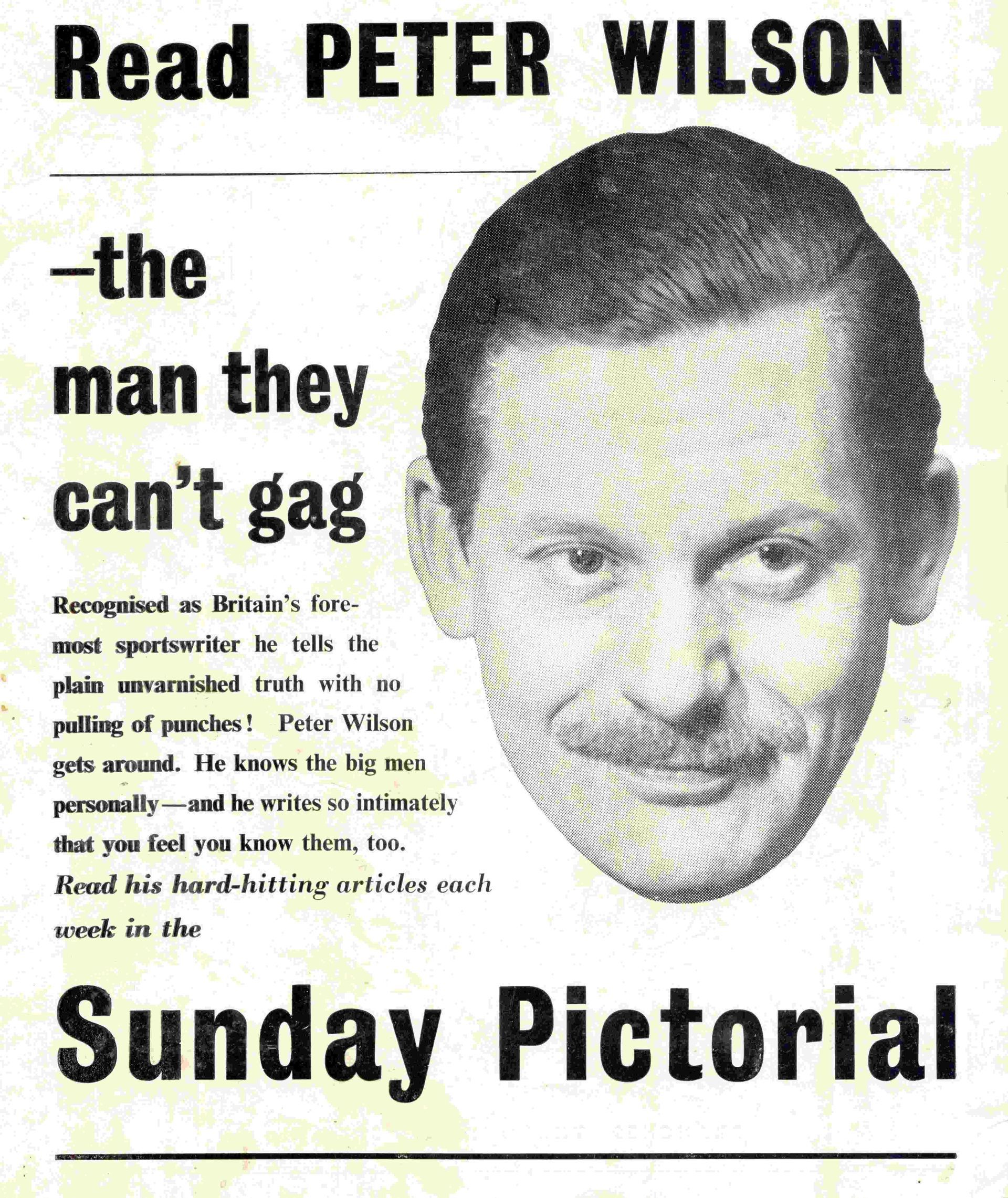
In a pointed addition, Wilson said: “His family state that he is straining at the leash to get back into action again. But it’s an open secret that some of the people close to him are not too keen on his returning to the ring.” Wilson gives no indication as to who he has in mind.
He ends: “if his doctors once more impose a further enforced rest on him, he should resign his titles on the understanding that if he does come back he will be regarded as the No. 1 challenger.”
Perhaps it’s not surprising that, with such responses, Bruce and Nora became increasingly suspicious of press and publicity. Notably, in a piece written after the Mills fight in 1949, Wilson very openly admitted how wrong he had been, under the headline “Bravo, Bruce Woodcock!” by “The Man Who Was Wrong”, with a photo of Wilson’s head turned upside-down at his own request.
Reboot
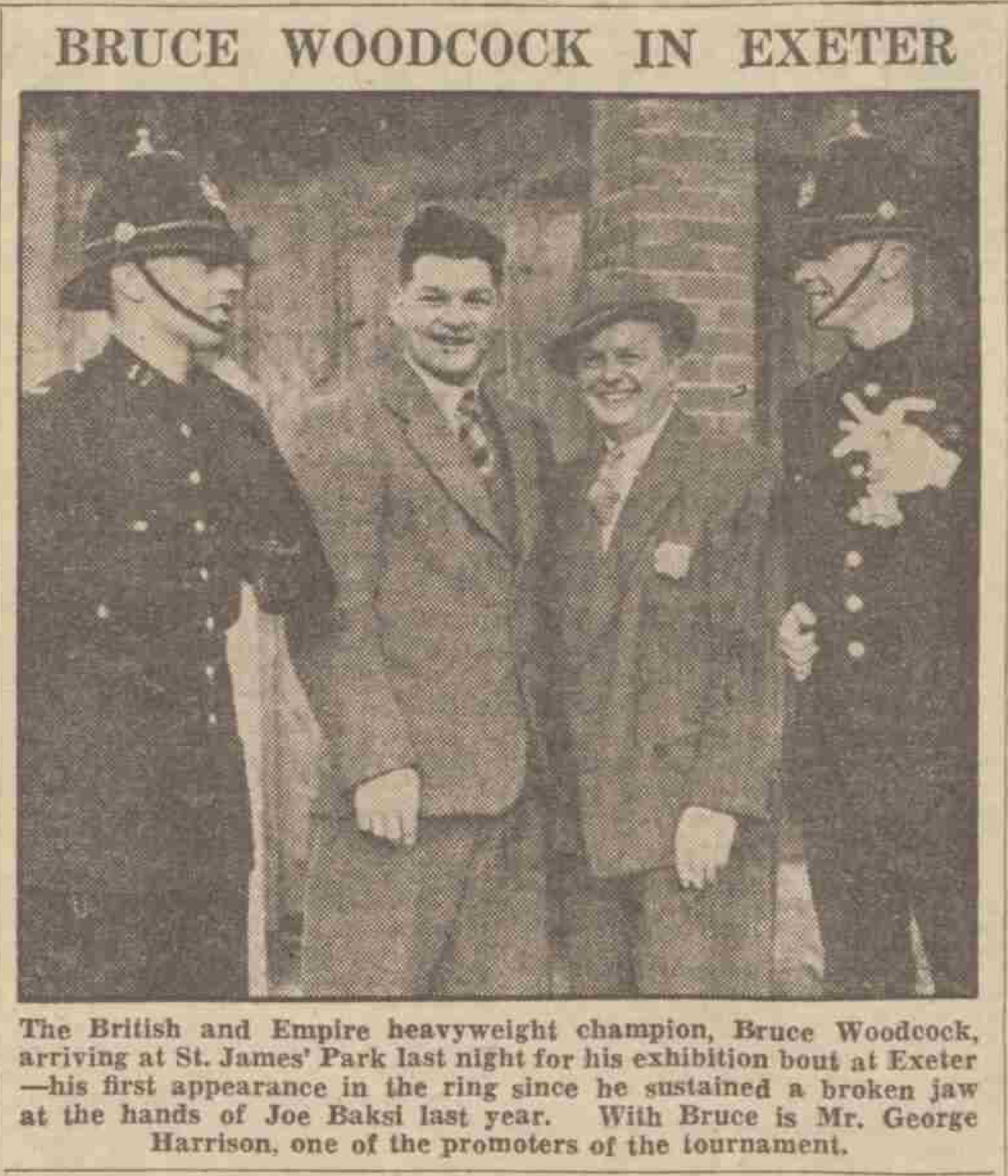
Bruce had no intention of resigning, and every intention of proving critics like Wilson wrong. By May, he replied to the British Boxing Board of Control stewards enquiry as to whether he intended to continue boxing and defend his titles. Bruce informed the Board that he did intend to continue and was training regularly in his gym. The Board nominated Freddie Mills as the contender for a two title British and European Heavyweight contest, but the fight would have to wait as Mills was booked to fight Gus Lesnevitch in July for the light-heavyweight title. In the meantime, Bruce had a number of exhibition fights against carefully selected partners. The first of these in Exeter proved a disappointment, as reported in the
Western Morning News on the 23rd June:
“Bruce Woodcock’s first appearance in the ring since his jaw was broken by Joe Baksi 14 months ago was a big disappointment to the crowd of about 5,000 who assembled in St. James’ Park, Exeter, last night. The British and Empire Heavy-weight champion was not extended in any way. As a guide to his future capabilities the show was a failure. Much more will have to be seen Woodcock in real action before any doubts about his ability to make a come-back can possibly be settled. Bruce, who gave an exhibition bout of three three-minute rounds with Frankie Slade, a sparring partner, showed a fast, deadly left and clever footwork. With no opposition, however, he even dropped his guard on one occasion. After the show, Woodcock said his injured eye had completely recovered and he was feeling perfectly fit and confident.”
Other exhibition bouts took place including in Newcastle, and by the last in Skegness on 26th August against Canadian Glen Harris, the Western Daily Press reported he was showing good form over the three rounds. But it was generally agreed that Bruce needed a real warm-up contest before taking on Mills.
Comeback
Rather than go for opponents Bruce had met and defeated before, Jack Solomons and Tom Hurst met to discuss plans for Bruce’s comeback at the Queens Hotel in Birmingham in June 1948. To keep and speculation to a minimum, they met under the guise of a fictitious company, Salamander Ltd. They both agreed that Bruce’s opponent needed to be an American, since there were no European fighters of a standard to provide real opposition or to draw a big enough crowd. Their first choice, Johnny Shkor, had an impressive record but a dispute about the purse between Shkor’s management and Solomons meant the negotiations fell through.
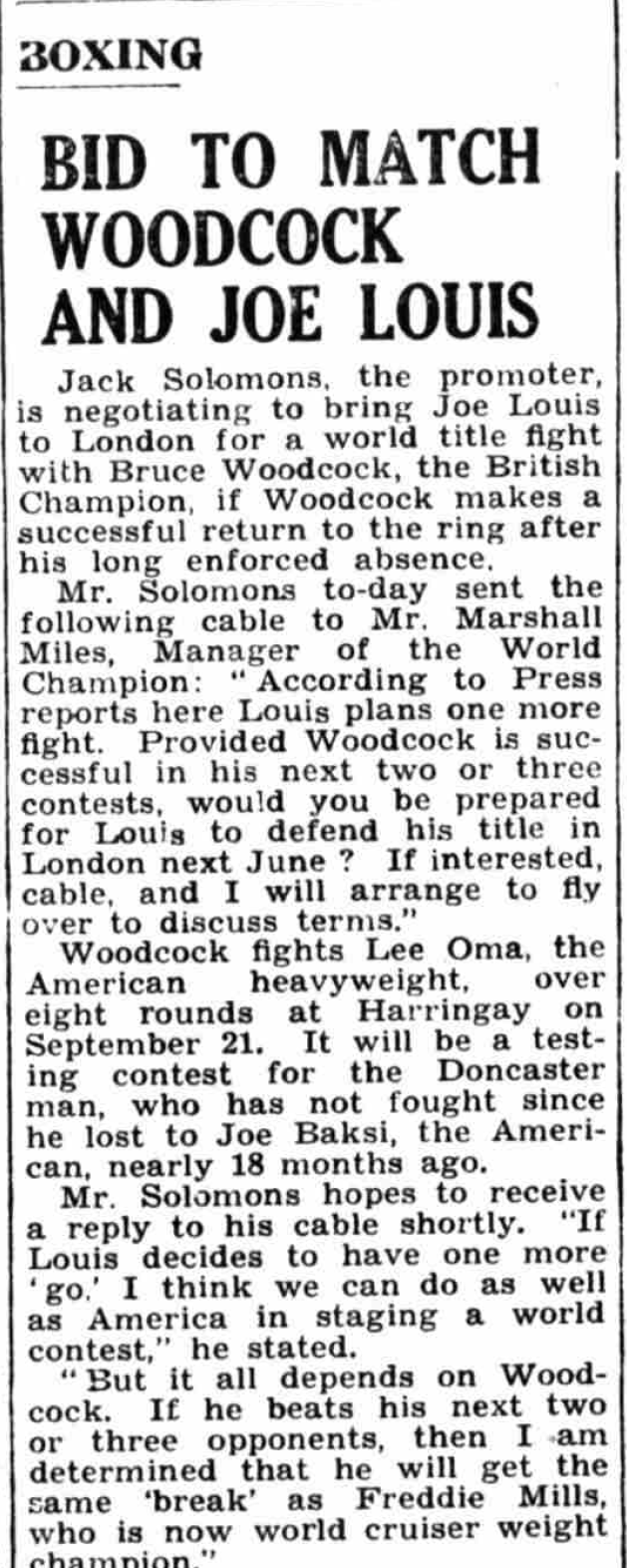
Instead, they chose Lee Oma. Solomons announced the fight in late August. Then, in early September he cabled Marshall Miles, Manager of World Champion Joe Louis: “According to Press reports here Louis plans one more fight. Provided Woodcock is successful in his next two or three contests, would you be prepared for Louis to defend his title in London next June? If interested, cable, and I will arrange to fly over to discuss terms.” Solomons told the press: “If Louis decides to have one more ‘go,’ I think we can do as well as America in staging a world contest. But it all depends on Woodcock. If he beats his next two or three opponents, then I am determined that he will get the same ‘break’ as Freddie Mills, who is now world cruiser weight champion.”
Within days, the 10,500 seats for the Woodcock-Oma fight at Harringay arena were sold out.
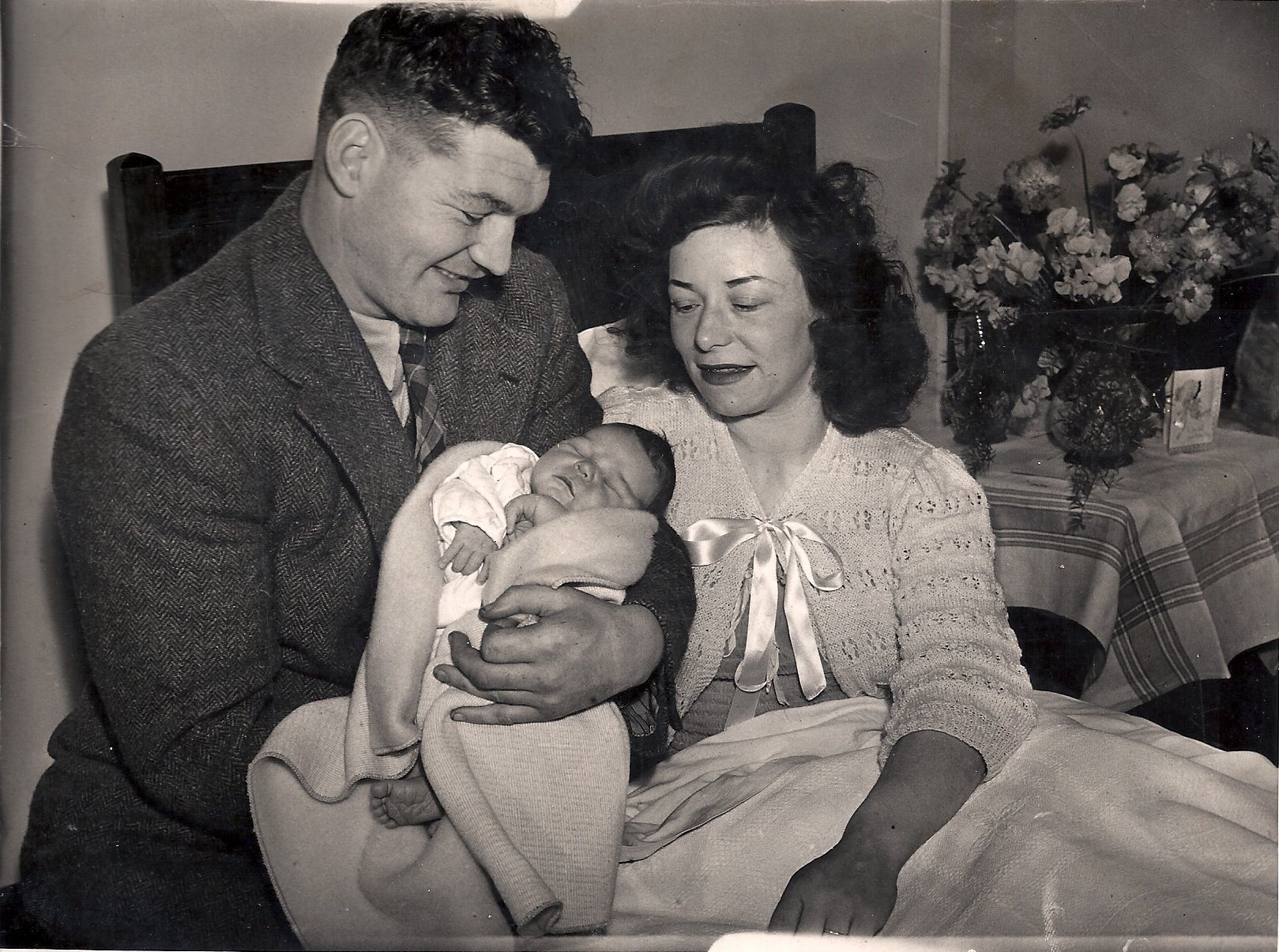
A Proud Father
On June 21st, the Yorkshire Evening Post had a short announcement with the headline “9¼ lb. son for Bruce Woodcock”:
Mrs Nora Woodcock (26), wife Bruce Woodcock, the boxer, has given birth to 9¼ lb. son in a Doncaster nursing home. Both are doing well.
“I am more excited about the baby than any of fights,” said Woodcock to-day.
“We shall have to call him Bruce. He would get called that anyway. We shall have teach him how to take care of himself because all the kids round here will probably want to fight him.”